Cup two · peg 2
The Cup With Your Name Printed On It
names in ink · names in mind
Most of the cups that leave our press carry a name. After a while you start to see why people want one so badly: a name in ink is a name that does not have to be carried in the head.
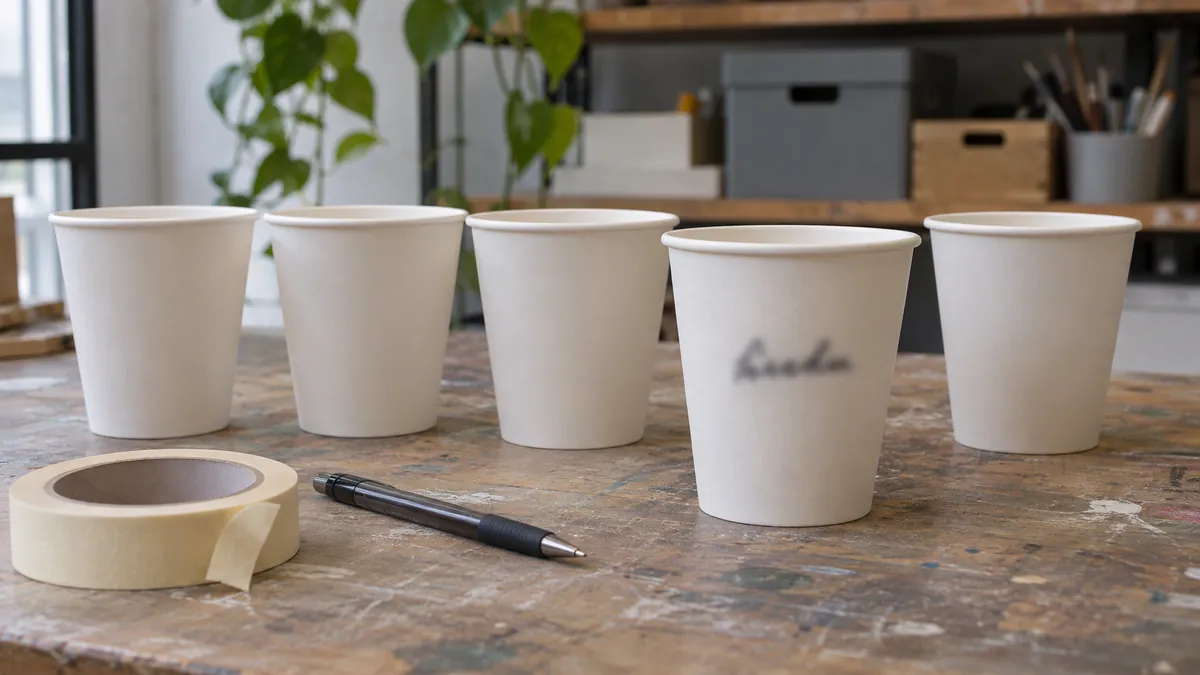
Why people print names
Offices order them so nobody walks off with the wrong cup. Families order them so the grandchildren know whose is whose. Couples order them for an anniversary. Under every one of those orders sits the same small wish: to settle a question once, in writing, so nobody has to remember the answer again.
There is a lesson in that for the rest of the house. The kitchen drawer that holds batteries, the shelf with the spare keys, the box of papers that must not be thrown away: none of these is hard to remember on the day you set it up. Six months later, they are. A label written once saves dozens of small searches later.
Label the house before it asks you to
Try a short afternoon with a roll of masking tape and a marker. Walk through the rooms you use most and write a plain word on anything you open more than twice a week to look for something: drawers, jars, boxes, the bin in the garage. Keep the words dull and exact. Batteries. Warranty papers. Spare keys, car. The duller the word, the faster the eye finds it.
This is not about doubting yourself. It is about moving a job from the head to the furniture, the same way a printed name moves the question of whose cup this is from the office kitchen to the side of the cup.
Holding on to the names of people
The harder names are the ones that belong to faces. It comes up again and again among customers who are half a century in: a new neighbour's name evaporates somewhere between the handshake and the end of the driveway. A few habits from the printing table help here as well.
Say the name aloud once in the conversation, the way you would read a proof back before printing it. Connect it to something you can see: Rosa with the red jacket, Tom from the corner house. And write it down within the hour, on the card by the morning cup if you keep one, with one detail beside it. A name you have spelled, said and written has been printed three times. It tends to stay.
When a name will not come
It will happen, to everyone, at every age. The kindest move is the honest one: tell the person you have lost their name for a second and ask again. Most people are relieved, because they have lost yours too. Then write it down, and next time you will be the one who remembers.
Some households go a step further and print the names of regular visitors on cups of their own, which turns every visit into a small rehearsal of who is who. You do not need a printer to copy the idea. A strip of tape with a first name on the guest cup does the same work.